The Debilitating Business Impact of Container Smuggling
The global supply chain is not just a backbone of modern commerce—it is the circulatory system of the global economy, moving trillions of dollars in goods across oceans, borders, and continents each year. Yet, within this intricate, interdependent web of trade lies a threat both pervasive and insidious: container smuggling. This threat is neither new nor static; it evolves continuously, becoming more sophisticated, more costly, and more destructive with each passing year.
At its simplest definition, container smuggling is the clandestine concealment of contraband—whether narcotics, weapons, counterfeit goods, or even human cargo—within legitimate shipments. But that simplicity is deceptive. Criminal networks have learned to weaponize the sheer scale of maritime trade. They exploit the fact that tens of millions of containers traverse the globe every week, knowing that the vast majority will never be opened or inspected. Customs and port authorities, constrained by resources, can only examine a small fraction, leaving an overwhelming percentage of containers essentially unmonitored. This statistical inevitability creates fertile ground for abuse, where illicit cargo can move alongside legitimate goods, undetected.
For exporters, the dangers are not abstract—they are existential. A single compromised container can unleash a cascade of consequences that reverberates far beyond the initial incident, threatening the financial, operational, and reputational stability of a business.
The Fallout: More Than Just Seized Goods
-
Financial Ruin – The seizure of a shipment can instantly erase months—or even years—of profit. Insurance, far from being a safety net, often explicitly excludes losses tied to smuggling or related legal actions. The financial blow can be compounded by the crushing burden of legal fees, which can spiral into hundreds of thousands of dollars even if the exporter is later exonerated. Cash flows collapse, contracts go unfulfilled, and investor confidence evaporates.
-
Reputational Damage – In the global marketplace, reputation is currency. Once tarnished by association with smuggling, even if entirely innocent, a company can find itself radioactive. Distributors withdraw, customers defect, and partnerships dissolve. Market access can be lost overnight, and the taint of suspicion often lingers indefinitely, transforming into a persistent perception of risk.
-
Legal and Regulatory Fallout – Smuggling incidents often trigger sprawling, multi-agency investigations. Customs, border protection, law enforcement, and regulatory bodies converge, bringing an intrusive level of scrutiny that can freeze operations and consume leadership bandwidth for years. For management, the distraction can be just as damaging as the legal jeopardy.
The Hidden Complexity of the Threat
Container smuggling thrives in complexity. From farm or factory to end market, a single container may pass through dozens of touchpoints—ports, inland depots, inspection stations, transshipment hubs—handled by a revolving cast of actors: port stevedores, freight forwarders, trucking companies, and customs brokers. Each handoff is an opportunity for tampering, whether at origin, mid-transit, or even post-arrival.
Smugglers do not operate haphazardly; they study the system. They identify predictable security gaps, bribe or coerce vulnerable workers, and manipulate schedules to exploit lapses in oversight. In some cases, legitimate goods are swapped out mid-transit under the cover of normal operations, replaced with contraband that will be retrieved later—leaving the original shipper oblivious until authorities arrive.
The Data Paints a Stark Picture
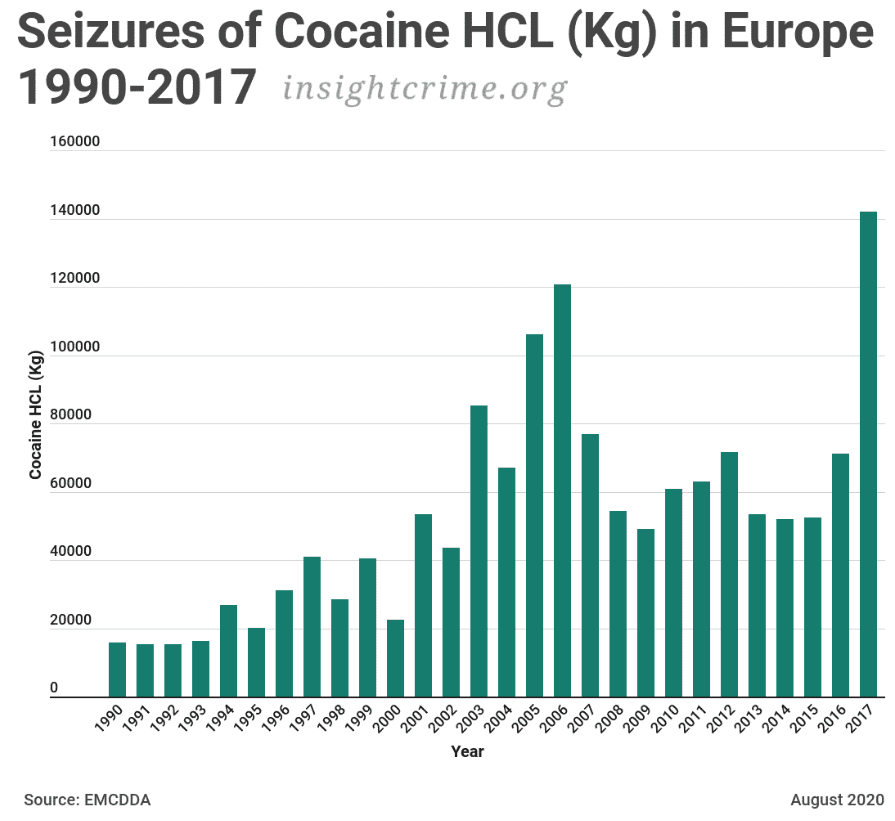
The past decade is littered with record-breaking seizures: multi-ton cocaine busts in containers of bananas, coffee, auto parts, or scrap metal; heroin hidden among textiles; synthetic drugs buried beneath frozen seafood. The 2019 MSC Gayane case—where U.S. authorities seized nearly 20 tons of cocaine valued at over $1 billion—is often cited, but it was no anomaly. It was a symptom of systemic vulnerability in containerized shipping.
Experts estimate that interdicted contraband represents only a small fraction of the total illicit flow. If the known seizures are enough to bankrupt companies and disrupt supply chains, the unseen and undetected portion underscores a far greater, silent risk.
Why Traditional Measures Fall Short
For decades, industry defenses have centered on paperwork compliance, mechanical seals, and random inspections. While these measures have value, they are inherently reactive—designed to respond after the fact, not prevent breaches in real time. Criminals have adapted, rendering these tools inadequate.
- Physical seals can be forged or replaced.
- Locks can be picked or cut without leaving visible damage.
- Inspection quotas are too low to meaningfully deter smugglers.
- Sensor technology, where deployed, often provides only partial, delayed data that fails to trigger actionable alerts.
In a world where smuggling operations are meticulously planned, relying on sporadic checks and legacy technology is like playing defense blindfolded.
The Path Forward
Addressing container smuggling is no longer about simply meeting regulatory checkboxes—it’s about operational survival. Exporters and logistics stakeholders must adopt proactive, technology-driven defenses that can detect, deter, and document tampering events as they occur.
Key strategic investments include:
- Continuous Location and Access Tracking – Real-time geolocation and door-event monitoring, with instant alerts for any deviation or unplanned access.
- AI-Enhanced Inspection Systems – Machine learning models capable of analyzing patterns, detecting anomalies invisible to the human eye, and cross-referencing multiple data streams for higher accuracy.
- Immutable Chain of Custody Records – Blockchain or similarly secure ledgers to ensure tamper-proof documentation of every handoff and access point.
- Collaborative Intelligence Networks – Information-sharing partnerships between exporters, carriers, ports, and enforcement agencies to proactively flag and intercept high-risk shipments.
A Critical Juncture
The economic and operational impact of container smuggling can no longer be dismissed as an unavoidable cost of doing business. It is a clear and present threat to the integrity of global trade. The exporters who recognize this reality—and invest now in resilient, technology-enabled security measures—will not just protect their cargo; they will protect their companies, their reputations, and their very ability to compete in the international marketplace.
In the high-stakes environment of modern trade, the choice is stark: evolve your defenses, or risk being undone by a single, well-concealed compromise.
Beyond Survival: Turning Security Into a Competitive Advantage
For too long, container security has been viewed purely as a defensive measure—a necessary but costly burden to satisfy regulators and insurers. This mindset leaves exporters trapped in a cycle of compliance minimalism, doing the bare minimum to avoid penalties without addressing the underlying risks. But in today’s environment, where supply chain integrity is under constant attack, security can and should be reframed as a strategic differentiator.
Security as a Value Proposition
Imagine being able to prove, with irrefutable data, that every container you ship is monitored from door seal to final delivery, with zero unaccounted access points. For buyers, insurers, and regulators, that level of assurance is not just comforting—it’s transformative. It shifts the conversation from “How do we mitigate this risk?” to “How can we capitalize on the trust this creates?”
Companies that adopt advanced security frameworks can:
- Negotiate Lower Insurance Premiums – Demonstrating continuous tamper detection and documented chain of custody can significantly reduce perceived risk, making insurers more willing to offer favorable terms.
- Command Premium Pricing – High-value importers will pay more for cargo that arrives with an unbroken, digitally verified custody trail.
- Expand Market Access – Certain regulated markets—such as pharmaceuticals, high-end electronics, or fresh produce in high-risk trade lanes—may only be open to exporters with proven, audited security measures.
- Shorten Customs Clearance Times – Ports increasingly use risk-based inspection models. A proven history of secure, compliant shipments can move you into “trusted trader” categories, expediting processing.
The Economics of Trust
Treating security as an investment rather than a cost changes the return-on-investment calculus. While implementing real-time monitoring and blockchain verification entails upfront expense, the payback can be rapid and tangible:
- Fewer losses from seizures or rejected shipments
- Reduced inspection delays, keeping supply chains fluid
- Stronger bargaining power with buyers, enabling better payment terms
- Entry into higher-margin markets that demand premium compliance
In industries like fresh produce, where margins are razor-thin and spoilage is a constant risk, even small gains in reliability can translate into massive improvements in profitability.
Creating a Network Effect of Integrity
When one exporter raises their security standards, they protect themselves. When an entire segment of a supply chain adopts these measures, they create a network effect—a shared reputation for trustworthiness that lifts all participants. This collective credibility can attract larger buyers, government contracts, and trade partnerships that would otherwise be out of reach.
Over time, this shift can reshape competitive dynamics. Exporters with poor security records will be priced out of premium markets, while those with demonstrably secure operations will become preferred partners. Just as sustainability credentials have become a competitive lever, so too will verifiable supply chain security.
The Strategic Imperative
The global trade environment is entering an era where resilience and trust are just as critical as speed and cost efficiency. Companies that embrace advanced anti-smuggling measures now won’t just survive the next major disruption—they’ll thrive in it. By transforming container security from a grudging necessity into a proactive growth strategy, forward-thinking exporters can redefine their market position and insulate themselves from the worst impacts of criminal infiltration.
The lesson is clear: The battle against container smuggling is no longer just about avoiding loss—it’s about building a foundation of trust so strong that it becomes a lever for growth, profitability, and long-term dominance in the market.